The Fountain Hills Community Band will perform the world premiere of the “March of Progress” by Eugene Anderson at 4 p.m. Sunday, Dec. 15, in the Community Center.
Anderson will conduct the free concert.
“Turning real life into music is an art,” said Anderson, describing his composition. He predicted that the ending of the five-minute selection will “lift you right out of your seat.”
You must be a member to read this story.
Join our family of readers starting at $5 for your first month and support local, unbiased journalism.
Click here to see your options for becoming a subscriber.
Register to comment
Click here create a free account for posting comments.
Note that free accounts do not include access to premium content on this site.
I am anchor
Community Band to debut march by local composer
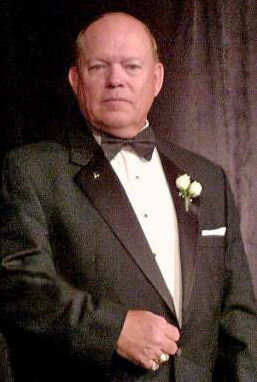
Gene Anderson-1.jpg
Posted
Barb Charzuk, Reporter
The Fountain Hills Community Band will perform the world premiere of the “March of Progress” by Eugene Anderson at 4 p.m. Sunday, Dec. 15, in the Community Center.
Anderson will conduct the free concert.
“Turning real life into music is an art,” said Anderson, describing his composition. He predicted that the ending of the five-minute selection will “lift you right out of your seat.”
He believes that “March of Progress” may someday be recognized as a “master work for bands.”
He wrote the music for woodwinds, brass and percussion.
He has composed more than 160 musical pieces for brass ensembles, solos, band, orchestra, choral music, hand bell choirs and music for the theater.
Anderson described his musical composition as a “story of the forces of change we face as progressives face off with the voices of keeping the status quo.
“Each force has a musical theme to describe the bustling activities of progress while a dignified, peaceful theme represents the calm of the status quo.”
The two forces eventually collide, said Anderson, as the conductor simulates interruptions of a meeting of the status quo to discuss tactics to answer the forces of progress.
The idea for the concert band composition has been swirling in his head for a number of years. He recalled thinking of the concept at least 10 years ago while driving in Colorado.
“But that was just the theme,” he explained. Anderson relates his music interpretation of the power struggle between status quo and progress to Salt River flooding issues in 1971.
“The city was tied in knots,” remembered Anderson in trying to find a solution to flooding.
Only one bridge existed across the Salt River near the flour mill. Flooding had paralyzed traffic for months while the city of Phoenix and Maricopa County officials debated a remedy.
“That calamity had a deep impression on me,” said Anderson. “It was a basic power struggle. How do we make our life better? Leave it alone or try to improve it.
“The reason I wrote this piece is that it’s important for all of us to see our community prosper, grow and offer new services. That’s what progress is all about.
“When you want to do something new, typically there are people who want to hold back. Call it the status quo. They don’t want to change. They don’t want to add anything. They don’t want to increase their expenses. Don’t change it, it’s not broken.
‘‘Then, there is the voice of progress that says we need this so much.”



Comments
No comments on this item Please log in to comment by clicking here