Fountain Hills Four Peaks Rotary hears from SRP Weed Control
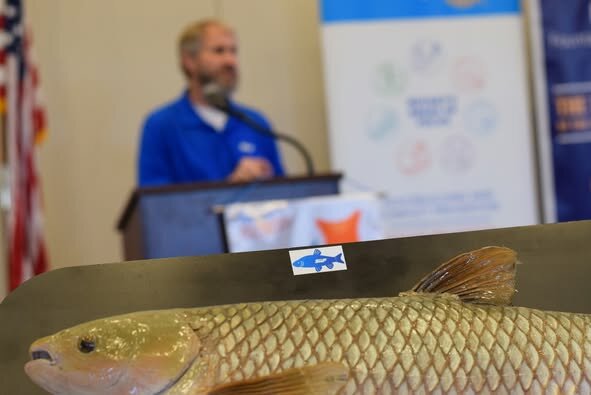
Brian Moorhead, a senior environmental scientist for Salt River Project’s Biological Aquatic Weed Control Program, explained the White Amur Fish Program to Four Peaks Rotarians at its May 8 meeting. Since the program’s inception in 1989, SRP has experienced less plugging of intake grates, reduced time spent cleaning grates and less turbidity impacts to city water treatment plants.
Photo courtesy of Debbie Clason
Moorhead said White Amurs are voracious plant eaters which consume 3/4 of their body weight in vegetation each day and as a result, are an environmentally-friendly, cost-effective way to manage vegetation in the canals. Sterile White Amur like this one are purchased from sustainable fish farms in Arkansas and introduced into Arizona canals, using a grate system to control their migration.
Photo courtesy of Debbie Clason
You must be a member to read this story.
Join our family of readers starting at $5 for your first month and support local, unbiased journalism.
Click here to see your options for becoming a subscriber.
Register to comment
Click here create a free account for posting comments.
Note that free accounts do not include access to premium content on this site.
I am anchor
Photos
Fountain Hills Four Peaks Rotary hears from SRP Weed Control
Photo courtesy of Debbie Clason
Brian Moorhead, a senior environmental scientist for Salt River Project’s Biological Aquatic Weed Control Program, explained the White Amur Fish Program to Four Peaks Rotarians at its May 8 meeting. Since the program’s inception in 1989, SRP has experienced less plugging of intake grates, reduced time spent cleaning grates and less turbidity impacts to city water treatment plants.
Photo courtesy of Debbie Clason
Moorhead said White Amurs are voracious plant eaters which consume 3/4 of their body weight in vegetation each day and as a result, are an environmentally-friendly, cost-effective way to manage vegetation in the canals. Sterile White Amur like this one are purchased from sustainable fish farms in Arkansas and introduced into Arizona canals, using a grate system to control their migration.





Comments
No comments on this item Please log in to comment by clicking here