The Salt River wild horses, as have we, had a tough year in 2020.
They have suffered challenges like disease, fire, loss of habitat and drought. But there is some good news for the new year.
The cooperation between the federal government (USFS), the Arizona state government (AZDA) and the Salt River Wild Horse Management Group (SRWHMG) has resulted in a success story for the horses.
You must be a member to read this story.
Join our family of readers starting at $5 for your first month and support local, unbiased journalism.
Click here to see your options for becoming a subscriber.
Register to comment
Click here create a free account for posting comments.
Note that free accounts do not include access to premium content on this site.
I am anchor
Program managing wild horse population
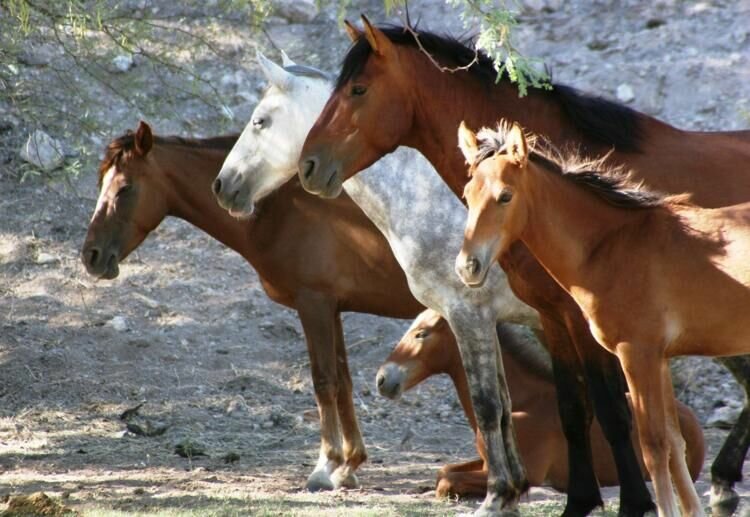
Horses.jpg
Posted
The Salt River wild horses, as have we, had a tough year in 2020.
They have suffered challenges like disease, fire, loss of habitat and drought. But there is some good news for the new year.
The cooperation between the federal government (USFS), the Arizona state government (AZDA) and the Salt River Wild Horse Management Group (SRWHMG) has resulted in a success story for the horses.
The all-volunteer programs by SRWHMG works a two-fold approach: the feed program keeps the horses healthy during the drought, while the fertility control program reduces the herd population in a humane way.
Both programs are necessary since the horses have a limited habitat; they live on 19,000 acres in the Tonto National Forest and are not allowed to outgrow their boundaries.
The birth control vaccine has been deemed a success by the Arizona Department of Agriculture.
The birth control darts are delivered by certified volunteers, without the need to capture horses. The darts are safe for the horses, and the vaccine does not change their natural behavior. The PZP darting program has reduced the number of foals born from more than 100 in 2019 to just 16 in 2020.
The goal is to humanely decrease the size of the population over time so it can remain in balance in its habitat.
Simone Netherlands, president of the SRWHMG said that for 2021, between five and 10 foals are expected.
“Our birth control program affords them (horses) the right to stay wild and free,” Netherlands said. “We want each horse born in the wild to be able to live a happy life in the wild.”
All programs implemented by SRWHMG are performed at no cost to government agencies. All support is from sponsors and donations.



Comments
No comments on this item Please log in to comment by clicking here