Sanitary District tapped for ASU wastewater project
water.jpg
If wastewater could be treated and purified to a level that is safe for human consumption, it could go a long way toward resolving issues of water shortage throughout the world.
That is a challenge that a group of civil engineering students took up last week during a conference at Arizona State University with a little help from the Fountain Hills Sanitary District. The water was collected at a point just before the water is pumped to the district’s advanced wastewater treatment plant, a couple of miles away.
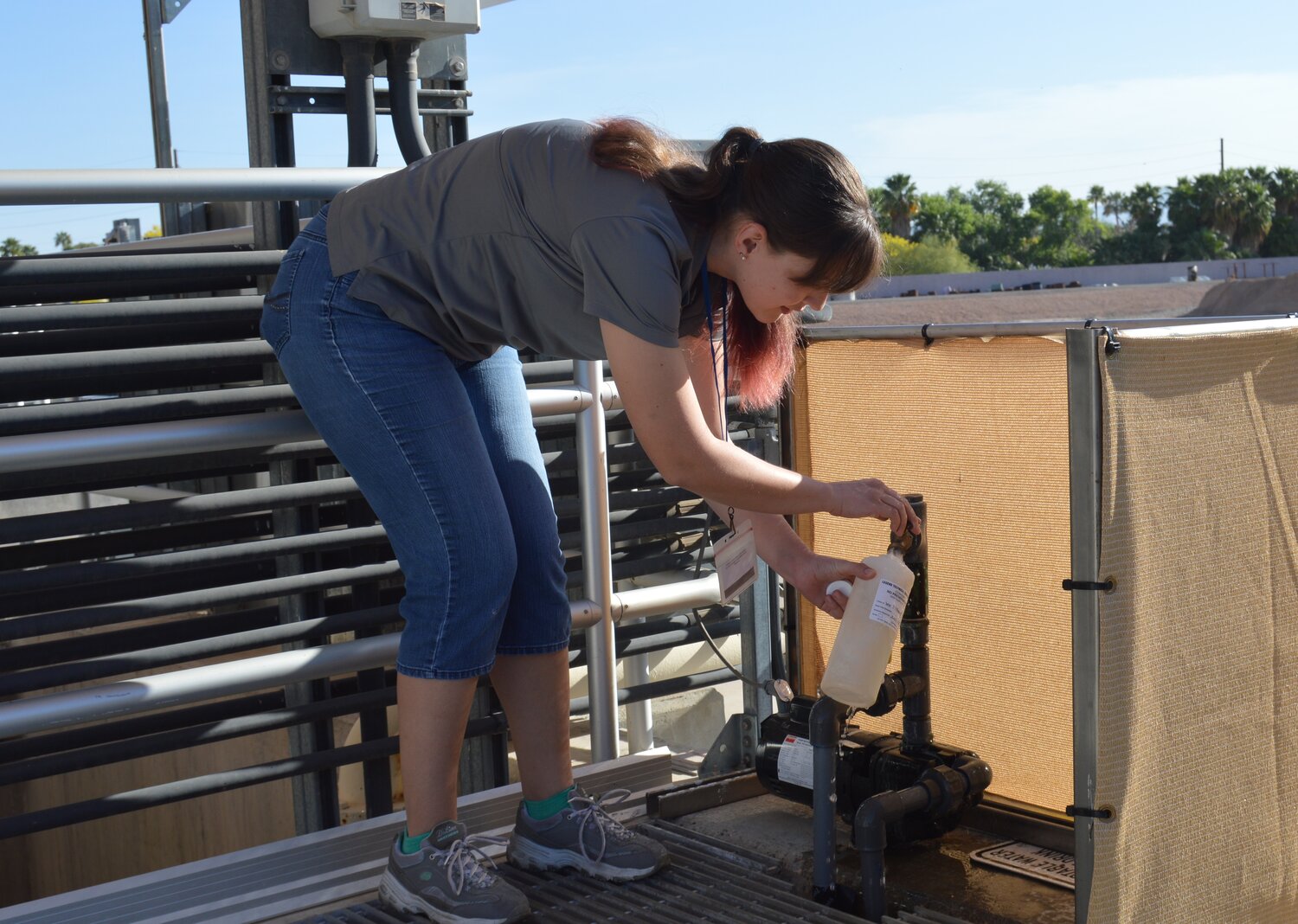
Civil and environmental engineering students used samples of partially treated wastewater from the Sanitary District treatment plant on Pepperwood Circle for the testing.
You must be a member to read this story.
Join our family of readers starting at $5 for your first month and support local, unbiased journalism.
If wastewater could be treated and purified to a level that is safe for human consumption, it could go a long way toward resolving issues of water shortage throughout the world.
That is a challenge that a group of civil engineering students took up last week during a conference at Arizona State University with a little help from the Fountain Hills Sanitary District. The water was collected at a point just before the water is pumped to the district’s advanced wastewater treatment plant, a couple of miles away.
Civil and environmental engineering students used samples of partially treated wastewater from the Sanitary District treatment plant on Pepperwood Circle for the testing.
The challenge was part of an engineering competition that took place at a conference of the American Society of Civil Engineering. Sixteen schools from Arizona, California, Hawaii and Nevada participated.
The competition is for which water sample is tested purist after a one-hour filtration process.
Emily Ford, a graduate engineering student at Arizona State, collected the required effluent from the Fountain Hills plant. She said the collected effluent will be combined with other material, making a total of about nine gallons.
The mix will have Miracle Grow to include material used in agriculture as well lavender extract. Ford was not certain why the lavender was chosen.
After the filtration, the water is tested for coliform (bacteria), chlorine and turbidity (clarity).
The United States is generally successful at providing clean drinking water to its citizens, according to a statement from the Sanitary District.
“Meanwhile,” the statement goes on, “millions of individuals living in developing countries do not have access to a protected water source, and even those sources protected against contamination may not be safe to drink.
“The objective of the competition is to remove contaminants, including partially treated wastewater, from polluted water bringing it up to drinking standards.
“The competition requires teams to design a reusable, low-cost household water treatment system that is low maintenance and simple to construct utilizing readily available and affordable materials.”
The Fountain Hills Sanitary District has been recycling wastewater for beneficial re-use since 1974 and has been involved in many student studies over the years to participate in the advancement of water treatment technologies.



Comments
No comments on this item Please log in to comment by clicking here